Saturday, 12 October 2013

Why are the teachers striking?

If you're wondering about why the teachers in the South West are going on strike on Thursday, and if you believe the dishonest malinformation presented to us by Mr Gove via the Mail, Telegraph, et al, then you need to watch this: http://www.channel4.com/programmes/educating-yorkshire/4od#3583918.

I would say that the efforts––both physical and emotional––of the teachers at Thornhill Academy are fairly typical of the work ethic and investment of teachers in all schools. They're certainly not exceptional. Next you should think of the conditions we work in and Gove's recent activities: accusations that teachers are 'betraying their profession' by questioning his plans to remove planning, preparation and assessment time for us to do our job properly; moving to abolish standard contractual protection against unreasonable working conditions; reactionary curriculum changes that are being implemented without consulting actual real-life teachers and despite warnings from the very 'think tanks' and special advisors that are supposed to be on Gove's side; accusations of teachers conspiring to make exams easy in some kind of selfish attempt to make themselves look good with minimum effort. Hopefully then you can see why almost all teachers are fed-up, on the brink and determined to stop our education system being privatised and used in a game political brinkmanship that is ultimately about the aggrandizement of an individual.

Gove says that the majority of teachers welcome the changes he is making. That is clearly either delusional or a fib. I have NEVER met a teacher who agrees with his vision for the future of our education. And I know a lot of teachers. Gove is part of a political party that is required to govern as part of a coalition because it could not achieve a majority of public support, and yet he is making the most radical and reckless reforms in our lifetime of an education system that is the model and the envy of much of the world, despite the picture the right-wing press paints of it. Teachers are just trying to force him to be accountable, explain himself and enter into discussion with the people that actually do the job and provide the service he is tinkering with like it's his own personal train set.

So, don't bitch about lazy teachers on Thursday. Not unless you've watched this programme and think that you could do it whilst being criticized, cajolled and complained about by your boss and the press. Instead, complain about the circumstances causing the strike and demand that Gove is held accountable.

Above all, don't fall into the trap of believing a word that he says; clearly his only interest is in his own career and political legacy.

Friday, 22 April 2011

Blaming the English

HIP_325002799.160969
The mighty Conwy Castle.  I know many think it pretty geeky/sad/tragic to visit historical sights while on holiday.  But I defy anybody to go to Conwy and not be inspired by it.

It is awesome.  Unbreakable.  Invincible.  Terrifying.  I reckon you could still hold out against some nasty bad guys in there for a pretty much indefinite amount of time.  Easy peasy.

And, of course, that was the exactly the point.  I've already blogged about the turbulent history of Wales and the subsequent struggles of the Welsh/English psyche.  I've been told that I probably went on a bit too much about it all, so I won't go through it all again.  Read it if you're interested in the endlessly complex and messy history of the birth of what we now call the United Kingdom.

If you're not bothered, you're still welcome here.

However, I really don't want you to be like the man I overheard in the gift shop.  He made me very, very angry.

This is what went down.  I was perusing the excellent and well thought out exhibition that explained the campaigns of Edward I in Wales in the 13th Century and the subsequent rebellions that ultimately ended up with some of the most impressive castles in the whole of Europe being built.  Edward built the castle and walls of Conwy in just five years, a feat that I'm not sure we could repeat even today.  Of course, he got other people to build it for him, but impressive nevertheless.  The speed of construction and the general mightiness of the structure was obviously intentional. With this castle, Edward was sending a message out that could never be ignored or misunderstood by the locals: I am in charge now and you now need to behave, please.

All of this was put very clearly in a display created by Cadw (the Welsh version of English Heritage) that was clearly aimed at children.  Anyway, I was minding my own business when a thick-set, be-tattooed and lobster skinned man of a similar age to me very audibly took exception to what he was seeing.

"Oh yes, that's right.  Blame the English time!" he protested in a loud Lancastrian accent as his blue-biro effect tattoos rippled in reaction to the perceived injustices before him.  "All over the world, everyone wants to blame the English."

I was stunned.  I turned to say something but I was only able to splutter in indignation as he stormed off into the North Welsh sunset muttering to himself.

Do we need to blame someone for building a pretty impressive castle 700 years ago?  And if we do need a scapegoat, it's going to have to be the English isn't it?  I'm pretty sure Edward I is going to have to be classified as English.  Or perhaps we could argue that he had a good French pedigree, but I don't think that would go down well with Mr England vs The World.  So we won't mention that.

And as for everyone, all over the world no less, 'blaming the English'.  That's a very strange way to perceive the world isn't it, to think that everyone is blaming you and your kin for everything?  Maybe Mr Tattooed And Indignant needs to understand that maybe there are people in the world that don't really give a shit about England.  Not in a bad way, simply in the way that I'm sure he doesn't give a shit about, say, Greenland.

It was, all in all, a very depressing experience.  The dude hadn't even bothered to read all of the exhibition and seemed to delighting in, wallowing in the mud of his complete and utter ignorance of the history of his own country.

You know when you hear something awful being said to you or someone close to you and it isn't until later that you manage to think of the utterly devastating, world-ending, brilliantly destructive reply that you needed right there and then?  This was one of those situations and this is why I'm boring you with it; I am blogging exactly why that ill-informed but highly-opinioned chump was so unimaginably and irritatingly wrong.

Touché.

Monday, 7 March 2011

Little Country


On 1 May 1707, the united Kingdom of Great Britain was created by the political union of the Kingdom of England and the Kingdom of Scotland.


Can you spot what's missing here?


On a recent and inspirational stay with many dear friends in an off grid converted cow shed in Mid Wales, a conversation struck up about whether Wales was a country or not.


(I say conversation, but out of necessity a conversation requires two or more people to offer trade thoughts and information. If you know me, when I talk about Wales there is rarely opportunity for anyone else to get involved. Perhaps soliloquy is a more appropriate noun.)


I started the 'discussion' by stating that I didn't think Wales had ever existed as a country in its own right.  My friends disagreed and said that of course it is a country, you idiot.  The subject of Wales and its identity as a distinct country has played on mind ever since, and seems relevant in light of the Welsh people voting overwhelmingly for more powers being granted to the Senedd.


And, of course, Wales is a country. And yes, I am an idiot.


But I think my point was that, according to what most people understand a country to be, Wales is a country.  But it's more complicated than that.  When we think about British history and the United Kingdom, we think of four countries - England, Scotland, Wales and Northern Ireland.  Easy.  But, I don't see four countries; I see two countries and two ideas or concepts.


Northern Ireland is a very difficult subject and one which I know little about, so I shall not offend anyone by attempting to write about it here.  But, needless to say, it is not an ordinary country.  It was created in the aftermath of Irish independence and has long been riven by those that want it to be the United Kingdom, those that want it to be the Republic of Ireland and those that couldn't really care less so long as everyone stops killing each other over it.  So let's put the whole thing to one side, walk slowly and sheepishly away and pretend I never mentioned it.


So the Act of Union put into effect in 1707 created the United Kingdom. The hitherto separate Kingdoms of England and Scotland got together, gave each other a big hug and decided to hang out forever more. Best friends forever.  After centuries of bitter squabbling and bloodshed - accurately and irrefutably described in Braveheart and other similar historical documents - the Auld Enemies were joining up and soon would conquer most of the known universe.  


To this day, the monarch of England is also the monarch of the Scots (not Scotland mind...never King or Queen of Scotland, only of Scots; one can't reign over the moors and mountains of Scotland itself, only over the folk that live in it.  I like that).  Queen Elizabeth II is the Queen of England and the Scots.


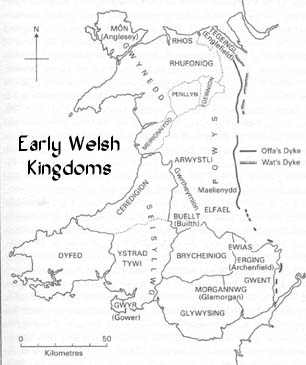
But where is Wales in this?  Where is the lovely little country I grew up in and harp on about so? Well, by the time the love in of 1707 occurred, Wales had been 'absorbed' into the Kingdom of England and had existed as such for a good 500 years or so.  The word 'absorbed' is almost the official term for the event, but in reality the geographical area we now call Wales was annexed by Edward I - otherwise known as Longshanks (he was a big lad apparently) or the Hammer of the Scots (I again refer you to the supreme historical document that is Braveheart. I think Edward was played by Edward Woodward observing closely the standard the-English-make-the-best-psychotic-villains Hollywood protocol).  Previous to Edward's Welsh Wars of the 13th century, 'Wales' was a vaguely insulting term for the collection of principalities and micro-states in the extreme west of the British mainland. The word derives from the Anglo Saxon words Wēalas and Waelisc meaning 'foreign land' and 'foreigner'.  It was insulting because these Celtic speakers of Brythonic languages that are now still alive in the form of modern Welsh, Cornish and Breton were definitely here before the opportunist Scandinavian migrants turned up in the uncertain and rudderless aftermath of Roman rule. A bit cheeky to then refer to the incumbent residents as foreigners, I'm sure you'll agree.  Take over the land, but at least do it politely.  


The spread of Anglo Saxon culture pushed the Brythonic speaking people further and further west and north until all that remained were a collection of tiny countries in what we now call Wales, Cornwall (spot that naughty Anglo Saxon foreigner word again) and those that migrated to Brittany as a result of the pressure from the east.  These tiny Kingdoms argued among themselves constantly and were never truly unified.  Occasionally, a very shrewd and, if we're honest, lucky ruler would manage to find himself ruling over a lot of them at once (notably Llewellyn Fawr (or the Great) who ruled over the Kingdom of Gwynedd and managed to incorporate the Kingdoms of Powys and do deals with various sycophant rulers of Deheubarth), but no one ever managed to rule over them all.  Llewellyn Fawr only got away with it because he'd done a deal with King John of England to send lots of cash and do as he said.  The trouble is that these brief arrangements of near-union of the Welsh peoples could never last because all the sons of a dead King inherited the land equally and immediately set about killing each other, carving up the kingdoms and generally undoing all the work done by their fathers.  


At no point leading up to the Welsh Wars is there a single entity called Wales.  The next best effort after Llewellyn Fawr was his son Llewellyn the Last who repeated the trick of conquering, subduing and doing deals with his Welsh neighbours to control a big chunk of what Wales is now.  However, with a name like that he should have seen what was coming next.  To cut a long story short, King Edward of England got fed up with not being in charge of absolutely everything and decided to act in the best tradition of his Norman forefathers and attack and kill and dominate everything that he could get his long hands on.  So, he invaded Wales and began what was at the time one of the bloodiest and largest military campaigns Europe had ever seen.  The Welsh, infighting and quarrelsome and divided as ever (much of Edward's Norman English army was provided by the Welsh who didn't like Llewellyn's bullying), stood no chance and Llewlelyn the Last ended up with his body in a Welsh abbey and his head on a spike in the Tower of London where you could have a good look at it for the next fifteen years.


Ironically, it was in a way Edward's spectacular conquest of the Celtic states to the west of his Kingdom that created what we call Wales today.  The 'country' we now call Wales was born out of the utter destruction and near-annihilation of dozens of independent self-governing states all now coming under the rule of England and its monarch.  Wales as a country is probably the result of the aggression of a Norman English monarch.


So a political and historical view of a nation of Wales is a difficult thing to understand.  Nevertheless, people say that it is the culture of Wales - the Welsh language, traditions, regional identities and so on - that set it apart as a distinct country.  This is true where I grew up in Carmarthenshire and also Ceredigion, Gwynedd and in many other areas of Wales.  But these cultural distinctions are harder to define in the border areas and in pockets such as Pembrokeshire and the Gower peninsula where Scandanavian and English influences are more engrained and perhaps even the main feature of the area's cultural identity.  Logic says that the further west you go, the further you travel from England and into the extremities of Wales, the more 'Welsh' the culture will be.  But, way out west, Pembrokeshire is very much an area of Wales influenced by English culture, far more so than Carmarthenshire to the east of the county.  The county's superb natural seaports meant that it was so long inhabited by Vikings and later the Norman English that indigenous Welsh cultural characteristics began to disappear.  Old Welsh churches in the west don't have steeples - that's an English style.  Pembrokeshire churches have steeples. The place names are more Scandanavian than Welsh: Bosherston, Skrinkle, Tenby, Caldey, Skomer to name a few.  As for Monmouthshire, well that hardly feels like Wales at all; aside from the occasional Red Dragon fluttering from a castle built by Normans to warn the Welsh what would happen if they started acting up again, it's hard to know where Gloucestershire ends and Wales begins.


My point is that it is hard to define the country of Wales as we know it now.  When we blithely list the four countries in the UK we barely know what we're talking about.  Historically, it has been a mess of micro-states grouped together by what they are not as much as what they are.  And trying to use culture is equally problematic.  Is it the language?  In many parts of Wales that is what is considered to be the defining feature of Welsh culture, but the Valleys is possibly one of the most fiercely 'Welsh' and proud areas and the Welsh language isn't much more than a background hum in those areas.


I think that the reason I'm thinking about this is at the moment is because of the recent referendum and also because I have often heard nationalists tub thumping about a free and independent Wales while citing inaccurate and sometimes plain wrong 'facts' about what Wales has been.  I would consider myself as a person that would like to see Wales govern itself and operate more outside of the union of England and Scotland.  However, I think that it should do so with a stark understanding of its own history and culture; there should be a sense of newness rather than reversion.  Mainly because in reality there isn't an old and idealised Wales to revert to.  If Wales is to be its own country, it must be a new and shiny thing; it's got to be a new place because there never has been an old place.  And when one is in the middle of the Welsh wilderness, walking through the ancient granite bones of the country and feeling the weight of millions of years of geology and wildness, that's an exciting idea.

Wednesday, 19 January 2011

Leroy's Moral Maze...


I've been watching the progress of the action taken by Martyn Hall and Steve Preddy against Peter and Hazelmary Bull with interest.  I think that it's an important and intriguing case and the argument surrounding the conflict of religious versus civil liberties is a crucial one.  It is a topic that divides people in the Christian world and one that I often struggle with.


If you can't be bothered to read the previous link, or if you're not that interested, I shall sum up the situation briefly.  As usual, I refuse to be held accountable for my lack of research, understanding or accuracy; I'm just saying what I think rather than saying that what is written here is some kind of truth.  It is conjecture.  My whole life is conjecture!


The basic story is that Mr & Mrs Bull own and run a guest house in Penzance, Cornwall called the Chymorvah Hotel.  Mr Hall and Mr Preddy are a same-sex couple living in a civil partnership, an arrangement that is seen in law as having the same rights and responsibilities as civil marriage. (See the Civil Partnership Act 2004 for all the details or just go to good ol' Wikipedia for a potted version).  Mr Hall and Mr Preddy fancied a break in Penzance - they seem like a well travelled and outward looking couple - and they booked a room at the Chymorvah Hotel.  According to them, they checked if they could bring their dog, which caused no problem apparently, but when they asked for a double room they were refused by Mr and Mrs Bull who cited their Christian faith as being incompatible with allowing an 'unmarried' couple to share a room in their hotel.  Mr Hall and Mr Preddy were obviously quite upset by this and sought to take legal action, action which they yesterday won at Bristol County Court with Judge Rutherford finding that they were directly discriminated against, something that is against the law in the UK.


Simple enough, you may think.  But actually, the story doesn't end here.  Judge Rutherford acknowledged the sincerity of the Bulls' beliefs and that in actual fact many Christians (and people not of the Christian faith, come to that) share them:


"I am quite satisfied as to the genuineness of the defendants' beliefs and it is, I have no doubt, one which others also hold...It is a very clear example of how social attitudes have changed over the years for it is not so very long ago that these beliefs of the defendants would have been those accepted as normal by society at large.  Now it is the other way around."


Judge Rutherford left the door open for the Bulls to appeal based on the fact that religious freedom is also a legal right in this country.  I find the Judge's dilemma very interesting indeed, and I think that this is a crucial argument that the church and secular world in the UK need to engage with.  The question in itself is intrinsically problematic: Should discrimination against a religion's freedom to discriminate be allowed?  Phew.
Let's look at the back story here.  It is a commonly held belief that Christians don't like gay people.  Usually, one of the first questions people ask me when they discover that I am a Christian is "Do you hate gay people?".  I've seen the change in expression on a gay guy's face when he found out I went to church.  How did this preconception come about?  To answer that, we need to read the famous verse in Leviticus 18 (verse 22 to be precise):
"Do not have sexual relations with a man as one does with a woman; that is detestable."
Unlike a lot of the Bible, it's quite hard to read around that and find an alternate meaning that isn't quite as controversial to the sensibilities of a 21st century middle class Westerner.  I'd say that was pretty explicit.  The sexual actions of gay people are detestable; that's what it says.  The way it is written even puts those exact words into the mouth of God Himself.  Blimey.
(Fortunately, we don't have to deal with such a moral maze with the commandment in the previous verse that says "Do not give any of your children to be sacrificed to Molek, for you must not profane the name of your God."  I think we can all agree that sacrificing anything to Molek is a bad thing, and I will defend to the death the rights of hoteliers to prevent people from sacrificing children to Molek in their establishments; it's just not cricket.)
I struggle with this stuff.  The truth is that I don't agree with it and probably never will.  I don't agree with vilifying and condemning people because of their choices.  I don't see how we can pick and choose what we get in a huff about and what we choose to ignore.  I also get confused about the amount of apparent contradiction in the Bible, especially in the Old Testament.  You only have to read on a couple of pages in Leviticus to find yourself reading "Do not seek revenge or bear a grudge against anyone among your people, but love your neighbour as yourself. I am the LORD.", which seems to be in altogether a different spirit from Leviticus 18.  
In fact, the more I read Leviticus, the more confused I get; which commandments here are definitive and which do we take with a pinch of salt as we view them through the smug-tinted glasses we view everything from our vantage point in the 21st century?  
For example, Leviticus 19:26: "Do not eat any meat with the blood still in it". Whoops.  So anyone that likes a stake medium rare or rare has broken that one.  
OK, what about Leviticus 19:27:  "Do not cut the hair at the sides of your head or clip off the edges of your beard".  If you wear a short back and sides, you've broken that one (a style Mr Bull seems to sport, along with most men in England) and it seems that a goatee is out of the question.  
The next verse says that you can't have tattoos, which is surprising if you look at the fashion amongst trendy church types at the moment; it is almost de rigueur for a trendy youth pastor to be inked up somehow, along with some blonde highlights and some age inappropriate clothing.  Check this out:
I'd love to chat with that dude about the book of Leviticus.  I'm guessing that he didn't read it all.  I doubt (but I can't be certain) that he is a mainstream Christian, but it kind of sums the problem of Leviticus up for me.
In fact, come to think of it, I might go and get a cool tattoo of Leviticus 19:28 as a symbol of my wrestle with faith.  That would be an interesting conversation point at church.
But, to be fair to Leviticus, lots of the directives make sense. 
“Do not degrade your daughter by making her a prostitute, or the land will turn to prostitution and be filled with wickedness". Fair enough.  
"Do not defraud or rob your neighbor".  Jolly good.  
"Stand up in the presence of the aged, show respect for the elderly and revere your God". Hear hear.  
"Do not wear clothing woven of two kinds of material."  Eh?!  Dammit!  My clothes are all filled with sin! NO!
My point is that it is very hard to know when to stop and start following commandments in Leviticus; some of them make perfect sense and are in fact what a large proportion of our laws and human rights are modelled on.  Don't kill people.  Don't steal.  Don't slander.  Don't be an arse.
But how come we get to pick and choose?  How come we can shave our sideburns without fear of persecution but we can't allow a gay couple to stay in the same room in a guest house?  Who decides that it's probably OK for a Christian to get a cool tattoo as long as it's about how gay people are bad?  
It's an unfathomably difficult subject; according to the Bible, all of these commandments were issued by God Himself - the last verse of Leviticus 19 says "Keep all my decrees and all my laws and follow them. I am the LORD." - and yet, thousands of years having passed, for some of them we seem to be able to exercise discretion based on changed standards and progress in society since the times of Moses.  
But not all of them.  Many Christians believe that gay marriage is wrong, but society as a whole believes it to be acceptable - it is protected by law in our country and the Civil Partnership Act of 2004 was supported by all the democratically elected parties in the Commons.  In the New Testament, in Romans chapter 13, it says "Let everyone be subject to the governing authorities, for there is no authority except that which God has established. The authorities that exist have been established by God".  I think that throws yet another massive and confusing spanner in the already confounding works.  Should the Bulls even be challenging the court's decision on this?  If they do, are they going against the beliefs they are fighting for the right to have?
Man alive!  My head hurts.
I am nowhere near learned or theologically savvy enough to unpick this stuff and offer an even halfway satisfying answer to any of it.  I think what I want to say is that it is really confusing, and there is nothing more annoying to me than a Christian standing resolutely in a camp as though they are sure that they are right, that the whole, mighty weight of the Bible's righteous teaching is behind their stance.  How can one do that?  How can one cite Leviticus as a reason to turn away a gay couple from a hotel, yet have a hair cut and eat a rare steak in the same chapter of the book that says we should follow all of the commandments in the same way?
Of course I sympathise with Mr & Mrs Bull and the dilemmas they face as Christians in a secular world, but I also sympathise with the rights of Mr Hall and Mr Preddy to live their lives as they see fit and to be respected as equals by others.  At the end of the day, I consider myself to be a Christian, a follower of the teachings of Jesus.  The Sermon on the Mount (See Matthew 5 to 7 if you're interested) is the cornerstone of my faith and is how I try to live my life.  A lot of what Jesus says here is in my eyes incompatible with some of the stuff that I hear Christians saying about a lot of controversial issues (homosexuality, Islam, crime and punishment, etc.) and doesn't fit with the secular stereotype of the intolerant and judgemental Terry Jones type Christian.  
Intolerance is a no-no.  Judgement isn't allowed.  Revenge and point scoring is not good.  Showing off your piety and holiness as if it makes you better than others, well that's not on.  
But forgiveness, charity, generosity of spirit and - above all else - love are good and what God is all about.  I'm paraphrasing the Sermon with incredible ineptitude, but I hope you get the drift.  All I can hope to do, as an ignorant and fallible follower of Jesus, is hold on to His words as they're reported in Matthew and hope the rest of the stuff that I don't understand will fall together and make sense at some point.  All of which sounds wishy-washy and unsatisfying, but I think that it's important that as Christians we admit this fallibility and discuss it with each other and with non-Christians.  Not to do so will result in extremism, intolerance and a blinkered vision that history has proven over and over again to be very, very dangerous.  
I don't mean to dilute what we believe in, but I do think that we have to admit we don't always know exactly what it is we believe.  We know we follow Jesus and we believe Him to be the son of God, but after that almost everything is down to debate and discussion and is not up to us here on Earth to decide on definitively.  It's hard to look at the fragmented and split church as it stands today and even harder to read its history and then argue that we all as Christians know exactly what we're on about and what God wants us to do. The beauty of Christianity is that there is room to argue and to disagree with each other.  In the meantime, we have all to look after our own shop and try to be good.  Whatever that means.
And, finally, I would suggest if you're the kind of person who doesn't like people getting up to stuff in your house you probably shouldn't be running a hotel; if you're a vegan you probably wouldn't be advised to work in a butchers.
As Christians, we need to know that “If you want to be perfect, go, sell your possessions and give to the poor, and you will have treasure in heaven".
Which, beyond giving some stuff to Oxfam from time to time, I'm clearly not going to do.
Discuss.

Saturday, 4 December 2010

Fat, Old Men


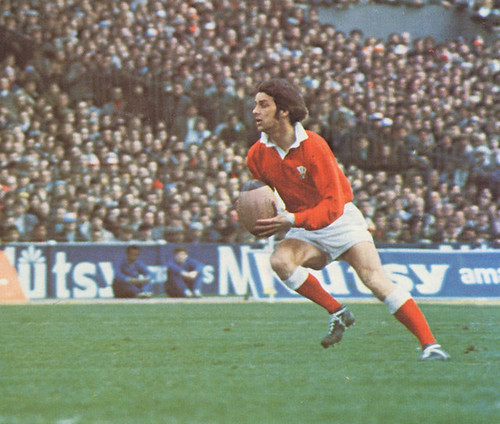
Ah, yes.  Barry John in his pomp.  Widely considered the best fly-half ever to have played the game.  Well, by Welsh people at least.  A magical number 10 maestro in the style that is guaranteed to get any Welsh rugby fan misty eyed and waxing lyrical.  A genius of vision and timing, a master of controlling a game and bringing his team mates into play at the exact right moment.  And, unthinkably in sport's current era of professionalism and money spinning, a part-timer and an amateur playing for the love of it in his spare time.

I love sport.  I've never been that good at it; I lack the necessary fine motor skills to be the mercurial number 10 in rugby union or football I dream of being.  Combine that with a quite spectacular case of pigeon toedness and you understand that I had to reconcile myself to a lifetime of passionate appreciation of the skills of others in sport.  Having said that, I did manage to carve out a very brief and mediocre niche in my school rugby team as a utility forward.  My favoured position was wing forward - too slow and clumsy to be a back, too weak to be a lock - but I think I played every position in the front eight over the three or four years I played.  I discovered that I could use a half decent bit of acceleration and a surplus of body weight to good advantage if I used my head and tried to play ahead of the game.  It was reasonably successful and got me into the school team for a couple of years.

(I even actually managed to play for Wales, to wear the famous red shirt.  Admittedly, it was for the Air Cadets and it would be safe to say that Air Cadets are really not very good at rugby; they seem to draw their ranks from boys that would rather be playing with Airfix kits and constructing balsa wood flying machines.  I enjoyed a tournament as a medium sized fish in a very small pond indeed; I think it must have been my sporting apex.)

I also explored a slightly darker side of my personality that I think is worth knowing about in the life long quest to improve one's nature and become a better person: there was no sweeter sound to me than a scrum half's breath being forced out of his chest as I drove my shoulder into his torso and dumped him on his backside.  Getting up off the ground, leaning excessively on the vanquished foe to further rub salt into his wounds and fan the flames of fear and intimidation.  You would feel invincible, indomitable and trot off to tidy up with whatever the fancy dans in the backs had managed to muck up.  It's not a particularly constructive or good character trait, but I think that as a bloke one needs to be aware of it; many of us have a need to dominate, to be more powerful, to be the victor at the expense of others.  After I left school, I quite fancied playing a bit more rugby for a local team (Clwb Rygbi Nantgaredig) and signed up to join.  I think I trained for about a month for what must have been about the 10th XV side, whereupon I realised that I had nowhere near the ferocity or fearlessness that is required to cut it in the carnage of low level Welsh club rugby.  Let alone the skill or application.  So I gave up rugby and focused on the far less frightening and more forgiving code of Association Football.  The physical costs of the two sports are incomparable; I'd rather have a twisted knee from a late challenge than an eye gouged out by terrifying, ginger farmer with hands the size of snow shovels.  I soon found that goalkeeping played to my skills as an over physical bully hell-bent on scaring the living daylights out of players that are more skilful and talented than I could even dream of being but who made the fatal error of being smaller than me.  OK, I've destroyed my knee playing football (jumping to catch a cross on a not-quite bowling green flat pitch in Nailsea), but I'm pretty certain if I'd stuck at rugby I'd have been picking my teeth off the ground, having my eyelids stitched back together and relocating many a jauntily angled finger with much more regularity than I have.

But now I'm fatter (thanks in no small part to the needy knee) and older and have had to scale back all my delusions of sporting grandeur.  I now enjoy watching the games and playing the vital sporting role of fanatical fan and armchair raconteur.  Sports like football bring so much pleasure to so many people in such a simple and innocent way.  Since the dawn of time, human beings have like nothing more than watching other human beings race, wrestle or knock heads for entertainment.  Which is why Sepp Blatter and FIFA really, really make me annoyed.

Why is it that self-serving, fat, old men that wear expensive but crushingly dull suits are in charge of almost everything that is good in the world?  Why should something as simple and joyful as sport be enveloped in a world of back-handers, bungs and bribery?  Sport should be innocent, carefree and, above all, entertaining.  These people are like Dementors that suck the soul out of the entertainment of the common Man and grow ever fatter, ever more self-important with every slurp and lap up of our innocent joy.  Money doesn't care about us.  Power couldn't give a shit about our passions or traditions.  If you're a Liverpool FC fan like me, or just a fan of sport that has followed the whole sordid, sorry affair of our transition from family run tradition to globally branded commodity, you'll know what I'm clumsily trying to describe here.  Don't get me wrong: I don't think England has a God-given right to host the World Cup - as a follower of Welsh international football I find the arrogance of English fans and media quite irritating and am very happy to see Russia, one of the biggest and most football mad countries on earth never to have hosted the competition - but I do find FIFA's smugness and greed one of the most nauseating phenomena on the planet.  Why the hell is Blatter and all of his executives treated like statesmen and dignitaries?  Who the hell do they think they are?  Why the hell do we play along with it and play along with inflating their egos?

So, hurrah! to Panorama.  Hurrah! to Roger Burden.  Smash FIFA; go for the jugular and bring all their leeching executives crashing down on their engorged and bloated backsides.  I'd be very happy to see the real fans, the real grass-roots of the sport turn on their detached, conceited and corrupt leaders and force them to find gainful employment in some other realm.

Wednesday, 1 December 2010

Widdly widdly woo!

Is this the most avant garde, experimental and downright dangerous thing ever to have happened on a popular music recording?


Yes.  Without a doubt, it is.

The whammy bar glissando introduction is almost half arsed, like Mr Van Halen can't really be bothered, but launches into the most mind-blowing assault on tonality and common sense, good old fashioned guitar playing ever recorded.  People have played faster and louder on many other records, this quite tame to many of Van Halen's other recorded guitar solos, but there is something about the fact that this is on a record by the King of Pop himself that trumps all other examples of widdly woo virtuosity.

Musicologists could - and almost certainly already have - write entire theses on this solo.  Obviously, it is technically very difficult to play.  However, most bedroom guitar nerds don't worry about that sort of thing.  Check this note perfect rendition for example:


Not a problem.  Note perfect, even down to the knock on the body of the guitar, although the forced harmonics don't quite have the same ferocity as the original.  You have to admire this man's - and it is almost certainly a man, isn't it? - dedication to learning things really carefully, to the detriment of his sleep patterns, personal hygiene and social skills.  I have known many bedroom based guitar geniuses, some of whom rank among the most accomplished musicians I have ever had the pleasure of meeting.  All totally blow me away when it comes to technical knowledge of how Western music works, from classical tradition to death metal.  However, get them in a band and it all goes wrong, probably for the disregard show to the fundamental life skills listed above; live music is a team sport and not really the preserve of the genuine geek.

(As an aside, I didn't realise that knock at the start was a guitar; knocking on the body of a guitar is something lots of players do to check they're on and live in a less obtrusive manner than playing a note or chord.  If Van Halen did that on purpose, that's an outrageous approach to a recording session and therefore true genius. If it was accidental and the producer (the great Quincy Jones) just thought he'd leave it in, well that's just as maverick and just as innovative; these big money recordings are high stake affairs and little touches like this are gold dust.)

What interests me more than the geeky widdlery and note frequency is the unfettered abandon of the performance, the cavalier approach to musical theory and convention.  I don't have the necessary education to explain it, but some of Mr Van Halen's note choices and musical phrases are challenging to say the least.  This is no solo by numbers that one would normally expect from a session player on a pop record. No sir.  This is a tirade, an outpouring of raw, visceral virtuosity and expression that can only come from a player that a) has done a lot of practising, b) is unbelievably self-assured, possibly almost psychotically so and c) is almost certainly drunk.

I really enjoy and admire technical excellence.  I have huge respect for players that have dedicated their lives to playing just so.  But more than anything, I love players that have done that work, have painstakingly built up a vast chandelier of skills, muscle memory and cerebral knowledge, and then choose to smash the whole lot up in an instinctive, emotional and gutteral mess.

And, to really cement the claim for the most avant garde exhibition of musicianship in the history of pop music, he did the session for free.  As Eddie Van Halen himself said to Rolling Stone magazine in 1984: "I did it as a favour ... I was a complete fool, according to the rest of the band, our manager and everyone else. I was not used. I knew what I was doing - I don't do something unless I want to do it."

Friday, 24 September 2010

; )


Today, I explained the awesome power of the semicolon to my ten year old students; I felt the time was right.

If I achieve nothing else as a teacher, I hope that I've played some small part in triggering the resurgence of that most undervalued and misunderstood of punctuation marks.  So elegant; so versatile; so addictive; so intimidating.

And I mean intimidating; if I write a letter of complaint I never fail to include a couple of semicolons.  My reasoning is that, as it seems that most people can't quite remember what they are for, when they see one in your writing they immediately assume you are well educated, intelligent and not to be trifled with.  This is, of course, rubbish.  Any tit can use one without too much effort at all; I don't know much more about grammar than what is required to teach ten year old children.  However, I have found the little semicolon to be devastatingly effective; it is the quick flurry of jabs before you deliver the knock-out right hook.

So far, my trusty semicolon has delivered a full and frank apology from a major car hire company and a no-questions-asked payout from an insurance company in cash, to name but two and not mentioning the scores of quailing and intimidated people at the sharp end of some pointed grammar.

So, get involved!  Join independent but related clauses!  Create lists!

Just think of the semicolon as a more cuddly and less severe full stop.  You could just join two sentences that you want to group together.  For example:

Just think of the semicolon as a more cuddly and less severe full stop; you could just join two sentences that you want to group together.


Isn't that nice?  So graceful and sleek.  I love 'em.

The top tip I give my students is this: think of a sentence that consists of two clauses joined with the word 'because'.  For example:

I feel sick because I have eaten too many chips.


That sentence is made out of two smaller potential sentences, "I feel sick" and "I have eaten too many chips".  Either could exist on its own.  If you take out the 'because' that is holding them together and swap it with a semicolon it looks like this:

I feel sick; I have eaten too many chips.


So much more distinguished.  The 'because' trick, as we call it, is pretty much foolproof and rarely goes wrong.*  Your writing immediately looks more sophisticated and you look more learned; people take you more seriously and are more likely to do as you say.

I get the kids at school to go home and ask their parents how to use a semicolon; the answers that come back are always very entertaining, and the salt-of-the-earth kids in my class love being able to out punctuate the older generation.  Anyone of my generation (I'm 35 and a product of the creative writing, anti-grammar fads of 70s and 80s education) is unlikely to feel confident about using one.  In fact, many language experts worry that it may soon disappear altogether.  We could soon live in a world where the only echo of the semicolon's glorious and debonair history is the cheeky wink symbol I've used as the title to this post.  That would be a shame and a real loss.  Witness how mastering the semicolon's simple rules is quite a thrill to young kids; they suddenly feel like they are in control and even masters of their often baffling and frustrating mother tongue.  I love to see bad lads that are so often reluctant to get into writing suddenly get a bad case of semicolon fever: "The ball hit the net; the shot was unstoppable".

The Americans love a bit of the semicolon (although they too are worried about its future) and we could learn a thing or two from them by getting them back out of the punctuation box, blowing off the dust and employing them to devastating effect.  Just be careful: one can easily overdo it (as I have intentionally done here by way of illustration) and look like the worst kind of sanctimonious grammar bully.  Less is more: it's all about considered and effective timing.

Use semicolons; they make you sexy.

*Please note that there is absolutely no way that you can use a comma in place of the semicolon in that example sentence.  Commas can never join sentences.  If a full stop could work there, a comma never will.  That would be a comma splice, one of the few offences along with treason and drawing spectacles on the Queen's face on stamps that is still punishable by death.  At least that's what I tell children.

Sunday, 19 September 2010

Is it wrong to love another man?


This video replaces the original one that I posted, removed from YouTube for some reason or other.  It's the same performance, but you need to go to about 1:25 to find it.  Or you could just watch the whole thing.

I love Pino.  If you're a regular here, you should know this by now.  Here are some of the main reasons I love him so:
  • He is a bass player;
  • He is a bloody good bass player;
  • He is playing a Fender Jaguar bass here, which is, let me tell you, very cool;
  • He's quite unassuming and nice;
  • The variety of music he plays is - in all honesty - truly staggering.  If you've got spotify, you may like to have a goosey gander at this.  If not, then you'll have to take my word for it;
  • He looks a bit like Jasper Carrott;
  • He's Welsh.

Enough said.

This track is from a live performance with French "smooth jazz" pianist Philippe Saisse and session drummer par excellence Simon Phillips.  PSP is a trio they formed to express themselves a bit and write material to showcase some of their strengths as players.  OK, it's a bit cheesy.  OK, it's a bit nerdy.  But, do you know what?  I don't give even the slightest bit of one.  And nor should you; this is brilliant music and brilliant musicianship, even if it is probably the direct inverse of cool.  Pino's playing is stupendous; the way he uses his right hand - one finger on each string with thumb on the E - is ridiculously hard to do without sounding like a sponge being hit with a slightly gone-off cucumber, but he manages to get attack and power all the same.  Amazing.

He doesn't over play.  He doesn't show off.  He's a proper bass player, not one of those "LOOK AT ME!" players.  He sits in the pocket, keeping everyone in order, doing his job.  But, every now and then, he sticks in a fill or flourish that is truly breathtaking.  I shall resist and not list them all with a ludicrously geeky description of each like the last time I eulogised Mr Palladino.  Just watch and find them for yourself.

(Though, if you ask me, I will tell you.  That is a warning you ignore at your peril.)

The other two dudes are pretty good too.  Well done them for providing a context for the king of all bassists to perform.  I salute them.

Sunday, 12 September 2010

One, two, three, eleven.


You may or may not be familiar with the works of The Swiss.  If you are, then the video above will - hopefully - bring a nostalgic smile to your deranged features.  The tippy-toed dance of Don't Meditate In Such a Way was the band's hallmark.  They would labour for hours over some of the most intense, uncompromising and mildly irritating music that could be created, unleash it on an unsuspecting public and, coup de grace delivered, would stand back and gauge the punters' reaction.

"I like the funny dance you do in that funny song", was far and away the most common comment on our work.

Ho hum.

We (for it was a band comprising Stewart Ford, Nigel Savage, Gareth Hamer and me) didn't mind though.  The band was envisaged as an antidote to the shoe gazing, self-important and largely humourless music scene we'd all had more than our fair share of.  We were serious about our music but had problems taking ourselves seriously.  You've got to enjoy yourself haven't you?

The Swiss, alas, are no more.  Or are they?  You can never tell with The Swiss; often no gigs happen for years at a stretch, and then, for reasons that are unknowable, suddenly a couple will come along at once.  However, Stew Ford, the main song writing force of the band is so utterly and unstoppably prolific that it is not long before more of his musical world leaks out into the open.  He has recently released a record of his own songs entitled Silence Is Golden.  It is a brilliantly intricate work that is very different from the apocalyptic sound of The Swiss; guitars are bell-like rather than guttural, rhythms dance rather than stampede.  You can recognise the Stewness though: guitar and bass parts woven together that, if untwined, would make no sense on their own, time signatures that are so devilishly complicated it's best not to think about them too hard.

Though think about them I must.  Stew is playing some of the songs off Silence Is Golden, and despite his immense, multi-instrumental talents, needs people to play the bits he hasn't got enough hands for.  So he asked some old Swissmen and Robin Mitchell - a trusted friend of the band and massively talented musician in his own right - to help him out.  This means that I've been doing a lot of counting to eleven recently...

Tightrope.mp3 by Stewart Ford

...and trying to replicate the mid-range growl of a Ford bassline. Not easy, I can tell you.  But refreshing to play music that challenges and makes me think.

The gig is at St. Paul's church, Coronation Road in Bedminster on Saturday 18th September. I think it starts at 6.30pm. Do come and help me count to eleven.

And, following the ancient Swiss custom when departing, I leave you with this:


Saturday, 14 August 2010

Jake Hess and Turkey

A recent tweet and blog by journalist Johann Hari (follow him on Twitter: @johannhari101) alerted me of the plight of the journalist Jake Hess in Turkey.  He has been arrested and imprisoned for reporting on the situation of the Kurds at the hands of Turkey and Iran.  Having just been to Turkey and enjoyed it very much -- it truly is an astoundingly beautiful and evocative place -- the story resonated with me.  It seems crazy that we still have this situation in the 21st century, a situation where government interest and political gumpf take precedence over human needs and rights and the freedom to tell the truth about what is happening.  Although Turkey felt a modern and vibrant place to be, there are some draconian laws surrounding freedom of speech and some startlingly lax approaches to protecting the rights of their fellow human beings. You cannot criticise Atatürk, the founder of modern Turkey; you can't use YouTube because it is censored by the authorities. This seems very much at odds to me with the image that Turkey wants to present to the world.


At the prompting of Mr Hari via Twitter, I decided to write the Turkish government a letter.  Please do the same if you feel stirred in the same way that I did.  I have copied my effort below.  The address to write to is contact@turkishembassy.org. 


Dear Sir/Madam,

Having recently returned from a holiday in your fabulously beautiful country, having experienced the warmth, generosity and hospitality of the Turkish people at first hand and loved every moment of it, I was shocked to read of the situation in which the respected American journalist Jake Hess finds himself in.  I cannot believe that a modern and respected country like yours would imprison a journalist merely for reporting about the situations of real people in real places.  Objectivity in journalism is not the same as supporting or sympathising with terrorism.  A journalist's job is to report on the situations that real people encounter and telling others about them.  Mr Hess is a freelance journalist and telling the stories of people in various situations and finding out more about them is what he does for a living.  Whether you like it or not, the world is aware of the plight of the Kurds and we all, as fellow human beings, have the right to learn more about it and offer support or criticism to them or to governments as we see fit.  It is for this reason that the work of journalists like Jake Hess is vital.  It may not always suit your country's wishes, but that's the way it goes sometimes; human interest should always trump political and ideological interest.

On my trip, I attended the Istanbul Modern art gallery.  I was inspired at the radical creativity and passion for life and art that I saw there.  If I'm honest, it took me by surprise to see the freedom and vigour with which the artists of your country expressed themselves, both women and men.  It challenged the preconceptions and stereotypes that live within me and in all human beings.  I cannot emphasise enough how sad I feel to have this feeling of inspiration and enlightenment crushed by the disappointment and frustration of the situation involving your government and Mr Hess.  Surely, you want to show the world that you are an open, progressive country that supports the ideas of truth and justice?

The idea that a respected and esteemed American journalist is involved with terrorism is a ludicrous one -- I believe he is being held at the Diyarbakir Anti-Terrorism Branch -- and your government should, if it has any semblance of the self-respect and integrity that I witnessed in many of its citizens in my recent trip, release Mr Hess immediately.

Yours faithfully,
Liam Owen.

Sunday, 23 May 2010

Dear Internet using person,

May I begin with a warning? This post is the result of an uncharacteristic bout of insomnia, doubtless brought about from an orgy of sleep last night that was definitely brought about by a day spent vomiting after eating a dodgy burger the night before that. Strange how seemingly insignificant decisions come back to haunt you, isn't it? As a result of all of this sleep dysfunction, I've been thinking. Something that I am not particularly used to doing when I am normally sleeping. And I've been thinking about serious things. Not the usual wow-isn't-this-almost-quite-interesting, don't-you-hate-it-when, I-think-this-you-should-think-it-too, internet waffle that my fellow bloggers and I love to wallow in, but actual genuine key issues in my life. So if this all seems sanctimonious, self-indulgent and extraneous to your life, I can only apologise. Feel free to turn over whenever you lose interest. However, in the interests of getting this out of my head and hopefully being able to sleep at some point tonight (it's 2am), I am going to treat this post as a purely selfish cathartic exercise. There's nothing like getting naked in front of the entire potential readership of the World Wide Web for getting things into the open.

You may, perhaps, be familiar with the situation that my wife and I find ourselves in. A while back, my wife suffered abdominal pains that we dismissed at first. However, those pains didn't go away and eventually we trundled to see the doctor, who looked a bit solemn and said that we ought to go and get an ultrasound scan to see what was happening.  Yeah, whatever, we thought as we again trundled down to the BRI, indulging in some window shopping on the way.  We sat in the waiting room of the ultrasound place for ages, watching the throngs of teenage girls and pissed-off looking grandparents-to-be file in and out of the mysteriously out of sight room.  Eventually, our turn came and my wife disappeared off for her scan.  I must admit that at this point, I was actually a bit excited: what if she was pregnant?  We hadn't exactly been officially going for a family at this point - we hadn't got the stopwatches, thermometers and line graphs out yet if you know what I mean - but it was on the cards and we had abandoned all the traditional obstacles one places in the path of this possibility becoming a reality.  Perhaps this was the cause of the discomfort in my wife's belly?  After a few minutes, my wife came out of the scanning room clutching an unmarked envelope containing a letter, the contents of which were a mystery to us.  All we'd been told was that we had to take the note to ward 6.

Ward 6 was deep down the labyrinthine warren of BRI corridors.  We handed the note to a medically official looking person.  The atmosphere changed.  Suddenly, the people handling us where serious and efficient.  Killing time in a waiting room with everyone else was no longer on the agenda: we were shown to a hospital bed, and despite not knowing what was going on, my wife was invited to occupy it.  We were confused: if you're going into hospital you pack your pyjamas and your toothbrush.  You don't just turn up in the clothes you're standing in, completely materially and mentally unprepared for the whole ordeal.  However, being good British subjects, we obeyed without complaint.  My wife sat up on the bed and I sat on one of those plastic covered NHS chairs that positively suck the joy out of life.  Soon, a doctor arrived, full of calming reassurance and knowledge.  She told us that they thought there could be a problem and could she have a sample of urine to do a test on please.  My wife obliged and off it went to be tested.  Later, a nurse asked her if she knew she was pregnant.  No, we didn't.  Eventually, when they were sure, the doctors came and told us that there was a 'mass' in my wife's fallopian tube.  This was almost certainly an ectopic pregnancy, where a fertilized egg gets lodged and begins to develop in the wrong part of the body.  The only course of action was surgery as there was a good chance that the tube could rupture; a life threatening state of affairs.

"You were never pregnant," the consultant assured us.  "This is a mass of cells that could never have developed into being a baby".

This all happened in the space of maybe three hours.  Surgery - miraculous keyhole surgery at that - happened the next morning, successfully saving my wife's life and removing the 'mass' and the irreparably damaged fallopian tube it occupied.  In that moment, it felt like any other routine potentially life threatening medical situation - appendicitis perhaps.  The aftermath, however, has been pretty devastating.

Losing a fallopian tube seriously decreases your chances of getting pregnant naturally.  As a result of the scare, suddenly pregnancy became an issue in our relationship.  We saw doctors and I had to undergo the exciting experience of issuing a sperm sample to be tested for motility, vigour and general manliness.  The results weren't good.  In a crushing blow that no man can truly appreciate until he's encountered it, it became apparent that my sperm was laced with an antibody that attacked the sperms as though they were an invading agent, killing lots of them and further reducing the chances of natural conception.  The combination of fallopian tube shortages and sperm self-annihilation meant that our chances of getting pregnant without the assistance of science were now slim.  Our life was not what we presumed it to be.

When you're getting married, doing a job, buying a house and building a home, why are you doing it?  I have lots of friends that are following a 'calling' or path through life that doesn't involve procreation, but I'd have to say that the majority of people I know have starting a family at the back of their mind as they are doing their thing.  Unconsciously, my wife and I were following a path that we'd set out for ourselves.  We talked about families and joked about the stupid names we could call our kids and how I could take them to football and brainwash them into supporting Liverpool FC, teach them Welsh words, all that young couple nonsense.  It did not occur to us for one second that that may not be possible.  Looking back, I think we assumed we had a right to it.  It was a given.  It was certain.  In the space of a few hours, that assumption was blown into smithereens, liquidised before our very eyes.  It was no longer a given.  It was no longer our right.

But I realise now that it never was.  We in the Western world have a tendency to regard lots of things as being our right.  The right to free speech; the right to choose our leaders; the right to watch TV; the right to own stuff we want.  The truth is that this is a delusion.  Probably the most fundamental right I have is to exist, but no one can guarantee that I will continue to do so by the time I finish typing this sentence, let alone the post or the end of a fruitful and long life.  Nothing in this world can be guaranteed, a bald, bare-faced fact that we're not used to looking in the eye.  However, events like the one I described above force you to look that motherfucker right in the eye, and in so doing you have a choice:  You can either sink into self pity and build an elaborate cathedral of cosmic unfairness to hide yourself in, or you can get a grip, sort yourself out and face up to the reality of what one is entitled to in life.  I believe that there is only one thing that we can take for granted in this world: the love of God.  It's the only thing that everyone, every single person that has walked, is walking and will walk the face of this planet is guaranteed whether the like it, see it, feel it or not.  Be they good, bad, Christian, Muslim, straight or gay, I believe that to be true.  I happen to be a Christian, as does my wife, but the theology of God's love for Man tells me that that is almost irrelevant, because He'd love me just as much if I were an atheist.  God even loves Richard Dawkins, which must be difficult given the nasty things he's said about Him.  Despite the horrible stories of bigotry, intolerance and judgementalism you may hear about Christians, the idea that God loves every human equally is a cornerstone of our faith.  It's in the Bible, especially the bits with Jesus in.  Go and read it if you don't believe me.  John 3:16 is a good place to start.  (By the way, I'm not saying that you have to believe or agree with it, I'm just trying to explain what Christianity is all about as an antidote to the media poison that is liberally placed before us).

In other words, God loves his creation, his children.  I have no right to anything other than that love.

For various reasons - ethical and practical - we will not undergo IVF treatment.  We decided together that we didn't want to force the issue that much, that we wanted to come to terms with the situation and admit that certain things are out of our control.  This is, believe me, not an easy decision to make.  In times gone by, the pressure to have families was huge.  Look at the lengths Henry VIII went to, for goodness' sake. Nowadays, that pressure is subtler but still there.  We have more choice over what to do with our lives, but in the age of social networking and iPads, we're more exposed to what people are doing with theirs.  It's really hard to look at something like Facebook and see all your friends, family and colleagues having kids and sharing the experience when you, in all likelihood, cannot.  One feels great joy and genuine excitement for them, but seeing yet another murky ultrasound scan (remember that waiting room?) portraying a burgeoning foetus used as an avatar is a bitter pill to swallow.  It is painful, hurtful and above all, humbling.  I would never, ever stop people from telling us about their triumphs and happiness as new or expectant parents, but it is inevitable and healthy that we grieve our loss and circumstance.  And it makes you realise again that having a family is not a given, that nothing is certain.

Recently, we've been talking about adopting a family.  Man, that's difficult.  Will we qualify?  Will we cope? Will we bond with it?  Will it feel like second prize? It's a can of worms that we never expected to prize the lid off of.  Even thinking about adopting is painful because it makes us realise that there are unwanted, uncared for children in the world.  How messed up is that?  Especially when we and many other people really want to have children.  Hang on a minute...

Perhaps I'm wrong; perhaps we do have a right that should insist on in this world aside from the unquestioning, unwavering love of God.  We have a right to be parented, to be guided into the world and shown how to work it as best we can despite it and us being a bit broken and unpredictable.  Children should have the right to have parents; children should be able to depend on adults to guide them.  As a result, we as adults have a responsibility to provide that right to them.  It is our duty, just as God sees it as His duty to love us despite everything we get up to down here.  Maybe realising that was the point of this journey; in the hammer blows that have reigned down on us in these super-heated events, maybe that's the little pure bit of metal we're trying to separate from all the cak.

Coming from good Liverpudlian stock, I like to sabotage my own earnestness with banality at every opportunity. In keeping with that tradition, I'll finish by quoting the Rolling Stones on this topic:


No, you can't always get what you want.
You can't always get what you want.
But if you try sometimes,
You just might find,
You get what you need.


Oh yes.  Woo.

Time for bed.

Tuesday, 13 April 2010

What could be down there..?


View Larger Map

See that track? Try and peer through the trees.  Is this the way to Narnia? A mysterious glade perhaps, shrouded with myth and legend?

Sort of.

I used to live there when I was a kid, from about 1983 to 1997.  Down there is Felin Fforest, a small house by a derelict mill in a forest, as the name explains perfectly if you understand a bit of Welsh.  The mill was pretty much a pile of stones, but I found a stone that had 'J. Owen, 1905' engraved on it.  Whoever J. Owen was, he had the same initial and surname as my mum.

When I was a little kid, Felin Fforest was the best place in the universe.  No end of adventures could be had here.

In the seemingly endless woods, one could build swings and eco-friendly model villages out of twigs and moss, although the sheep will invariably eat the village and it's villagers, creating Sheepzilla mayhem.

The stream beneath the bridge you're standing on is the Pibwr, a tributary of the Cothi river so insignificant that most maps don't bother to show it.  This is a stream you can swim in, jump in, race sticks in, wee in, do whatever little boys want to do when they see a river.

Behind the house beyond these trees, the hills are absolutely flawless sledging surfaces in the unfailingly snowy winters and in summer they provide no end of opportunity for wargames and hide and seek.

Felin Fforest was a self-contained utopia for a 10 year old boy and his mates.

However, for a teenager it was not so idyllic.  I desperately wanted to be playing and hearing new music, meeting girls, finding out about the world and this was not the place to be doing any of that.  All there was were sheep, trees, water, moss.  I couldn't wait to get out and seek my fortune in a properly concreted over place.  Like everyone I knew, I passed my driving test at the first possible moment and bought a cheap car to escape to the bright lights of Carmarthen - a forty minute drive away - whenever I wished to.  The urban, golden paved potential of Swansea was the stuff of dreams, a Shangri-La impossible to hold in one's imagination...

Well, not quite.  Looking at it now though, I'm more inclined to side with the 10 year old me than the 16 year old me.  Now I live in a city, can see and do whatever I like whenever I like, I'd quite like to go back to Felin Fforest and build a model village and wait 'til the sheep come and unleash a ruminant apocalypse.  It beats litter and queuing and dust and black bogeys.

As I'm sure those very same sheep would tell us, the grass is always greener wherever and whenever we are not.

Do feel free to explore using the quite remarkable Google street view thingy. Brechfa is about a mile up the road to the South West.  If you fancy a pint or a bit of mountain biking, Abergorlech, three miles in the opposite direction, is the place for you.  Alternatively, you could look for Gwernogle and Llanfihangel-Rhos-Y-Corn to the north for some really wild living.  (I had a friend up there who's track to the house from the tiny road was about two miles in length).  Hwyl!